
Envisaging to further expand the scope of radio, Telecom Regulatory Authority of India on Wednesday invited suggestions on issues relating to satellite radio service to chalk out a policy framework for the new technology which, among other things, ca

The Indian Air Force conducted precision strikes on terror hideouts in Pakistan, targeting a Jaish-e-Mohammad communication network housed in a primary health centre in Tehra Kalan village. The communication setup was essential for planning and coordinating activities with infiltrated terrorists in Jammu and Kashmir. The strikes aim to dismantle the communication network and hinder the terrorists' ability to operate.

India's space regulator INSPACe has granted a license to Starlink to offer space-based internet services in the country. The authorization is valid for five years and subject to regulatory provisions and clearances.

This has also raised concerns over undetected infiltrations from across the Line of Control and terrorists potentially residing in the outskirts of cities and villages, they said.
Elon Musk's Starlink has got licence for satcom services in India, according to sources.

Social media giant Meta Platforms and Bharti Airtel on Monday announced a collaboration to jointly invest in telecom infrastructure to cater to the rising demand of high speed data and digital services in India. The announcement comes on the back of telecom operators' demand to share revenue with service providers to build networks. "Airtel and Meta will jointly invest in global connectivity infrastructure and CPaaS (communications platform as a service) based new-age digital solutions to support the emerging requirements of customers and enterprises in India," the statement said.

The government on Wednesday notified its decision to permit 100 per cent foreign direct investment (FDI) under automatic route in the telecom services sector. In a press note, the Department for Promotion of Industry and Internal Trade (DPIIT) said foreign investment in telecom services will be subject to the condition of Press Note 3 of 2020. Accordingly, cases requiring prior government approval under the provisions of Press Note 3 will continue to be in place.
Swedish telecom major Ericsson will be the first multinational to manufacture radio base stations for mobile phones in India to cater to the operators here for their network roll-outs.

The Indian Railways is replacing its outdated signalling system with the latest automated train protection technologies - European Train Control System and Train Collision Avoidance System.

According to software company Mavernir, the new virtualised networks would lead to a saving of 40 per cent in capex and 34 per cent in terms of lower operations cost for operators.

'We have informed the government multiple times that the situation in the US and India are different.' 'Here, there will be a 500 MHz gap in the frequencies which will safely allow aviation without interference.'

Messages sent through Internet-based messaging service providers such as Whatsapp, Signal, and Telegram, as well as those which are encrypted, are understood to be within the Act's ambit.

The merits and demerits of the telcos' 5G strategy however is clearly dependent on the financial muscle of players, reports Surajeet Das Gupta.

The Ministry of Information and Broadcasting (I&B ministry) may launch its review of the government's plan to potentially reserve the crucial C-band of radio frequencies for 5G and 6G telecommunication (telecom) use, said officials. While the incumbent broadcasting operators have warned that the plan will leave "precious little spectrum" for broadcasting services, telecom service providers (TSPs) have pressed hard for getting access to the C-band. In multiple letters to the I&B ministry over the past month, the News Broadcasters & Digital Association (NBDA) has said the industry would be left with precious little spectrum for broadcasting services if the Department of Telecommunications (DoT) further allocates the scant C-band for 5G.
Telecom operators will need to shut down 5G services in high-frequency bands in and around airports following restrictions imposed by the Department of Telecom at the request of the civil aviation ministry, according to sources. Based on buffer and safety zone details provided by the aviation ministry, the DoT has asked telecom operators to not install 5G base stations in the 3.3-3.6 Ghz band in the area of 2.1 kilometres from both ends of the runway and 910 meters from the centre line of the runway of Indian airports with immediate effect. "Telecom operators will need to shut down 5G service in the 3.3-3.6 Ghz band only in and around airports based on the order.

National Commission concluded that false and baseless allegations had been made in the complaint to claim a highly exaggerated and atrocious amount of compensation.
Bharti Airtel and Tata Group on Monday announced a strategic partnership for implementing 5G network solutions for India. Tata Group has developed "O-RAN (Open Radio Access Network) based Radio and NSA/SA (Non-Standalone/standalone) Core and has integrated a totally indigenous telecom stack, leveraging the Group capabilities and that of its partners", according to a joint statement. This will be available for commercial development starting January 2022.

While the market for satellite broadband currently is small, the potential is large as an estimated 30 per cent of the country does not have reliable terrestrial broadband services.

The Tata group's tryst with mobile services, with either CDMA or GSM technology, did not really fly, forcing it to close operations and write off losses. Now the group is back in the big game, this time straddling the telecom equipment, network and technology space in India as well as the global market. To this end, it is leveraging the opportunities that flow from 5G technology through open radio access network, or O-RAN. Recently, the Tata Sons' subsidiary Panatone Finvest acquired 43.3 per cent in Bengaluru-based telecom equipment manufacturer Tejas Network for Rs 1,850 crore and announced it would buy another 26 per cent of the voting capital through an open offer.

Will open radio access network technology (O-RAN) disrupt the way 5G networks roll out in the country? After all, it promises to offer a substantially lower capital cost, enables the choice of an array of vendors, and provides more network flexibility - all very important for telcos who expect to invest over Rs 60,000 crore to roll out a pan-India 5G network and that's without spectrum costs. But more importantly, it counters the stranglehold of global telecom gear makers such as Ericsson, Nokia, and Samsung over telcos to whom they sell propriety technology and bundled hardware and software.

We asked colleagues, present and past, to reflect on a man who has made such a difference to their lives and careers. Here it is then, a rich collection of memories that offer enchanting glimpses of the enigmatic Ajit Balakrishnan.
As many as 2,000 chips are annually designed in India by semi-conductor and fabless companies, Intel India managing director Prakash Mallya said in a conversation with Business Standard. Mallya was reiterating the importance of India in the semi-conductor sweepstakes. "As much as 90 per cent of the semi-conductor companies have a design footprint in India.
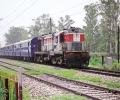
Indian Railways is in talks with Reliance Jio Infocomm to allow the Mukesh Ambani-led telecom major's use of its towers. The aim is seamless mobile and internet connectivity for passengers along the 67,368-km of tracks. The Railway Board has entrusted its RailTel Corporation arm to work on the modalities with Jio. The Jio tie-up is expected to bring down its telecom bill by at least 35 per cent from this financial year.
The papers noted that the 5G network is built on easily accessible and open Internet protocols and it inherits all the vulnerabilities of previous generations which make it vulnerable to cyber-attacks and compromising the security of the entire system.
Reliance is leveraging the technological change of building a virtualised 5G network which would see the current hardware-dependent networks shift to software-centric platforms.

Based on industry estimates, telecom companies, including Bharti Airtel, Reliance Jio, Vodafone Idea and BSNL, are expected to invest over $10 billion on buying 5G telecom equipment in the next five years as they transition from non-standalone networks to standalone 5G networks.

Move to help India export hi-end vehicles.
Motorola's long-pending proposal to undertake wholesale marketing, cash and carry stocking and sale of goods has been cleared by the Foreign Investment Promotion Board, the company said in a statement on Friday.\n\n\n\n
The company recently received permission to launch GSM services within its existing license and is awaiting allocation of spectrum, the radio frequency that enables wireless communications, from the government. CDMA and GSM services cannot be operated on the same spectrum.

The Big Two telecom companies have accelerated their moves towards this next-gen technology, though they have chosen very different routes to getting there.

'We have filed our draft red herring prospectus for a floating IPO for a net offer size of 86.6 million shares.'
Under the previous quality of service rules, penalty on call drop was Rs 100,000 per violation and could go up to Rs 200,000 in case of third subsequent violation.

There will be a huge market for healthcare professionals, data and security experts and digital marketers, says Navneet Singh, founder, Avsar HR Services.

She was a Hollywood star, much sought after. She also helped invented technology which changed the world.

In the not too distant future, you could see 5G technology being used for functions such as remotely-performed robotic surgeries, mine equipment operated remotely or cars driven by someone sitting hundreds of miles away. While these ideas will certainly find application globally, the urgent need for them in India could spur swifter adoption here than elsewhere.

Nokia is one of the leading telecom equipment manufacturing companies in India
